
Introduction
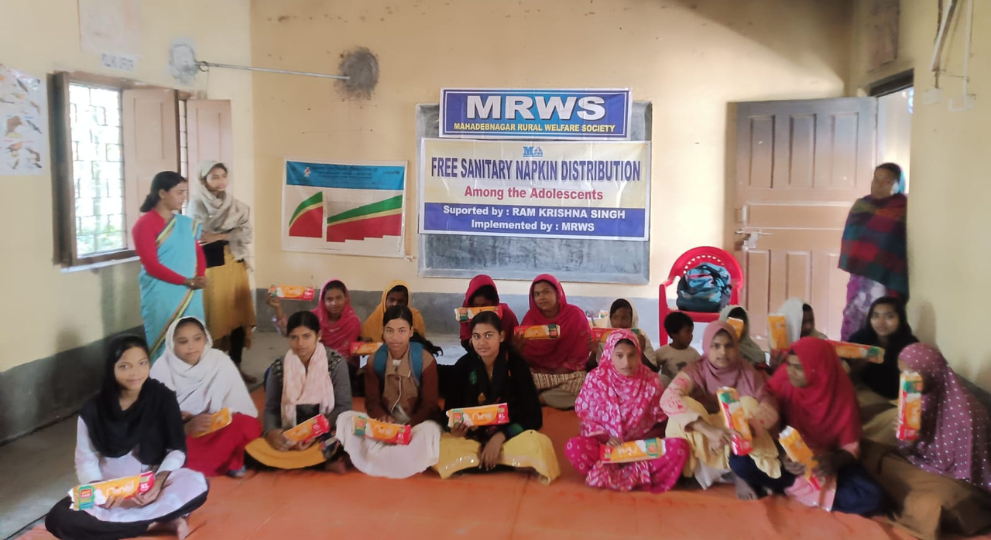
Menstrual hygiene remains a major concern among adolescent girls, especially in marginalised families living in rural and economically vulnerable communities. Lack of awareness, poverty, social taboos, and limited access to sanitary products often lead to poor health, school absenteeism, and increased risk of infections. To address these issues, Mahadebnagar Rural Welfare Society (MRWS) initiated a Free Sanitary Napkin Distribution Programme in Farakka Block with the generous support of respected Shri Ram Krishna Singh.
The programme aimed not only to provide sanitary napkins but also to build awareness about menstrual health, nutrition, education, and child marriage prevention.
Project Area and Coverage
The programme was implemented across:
Six Gram Panchayats, 25 villages
Target beneficiaries: Adolescent girls from marginalised and economically weaker families
Special focus was given to:
School-going girls, School dropouts, Vulnerable adolescents at risk of child marriage, Girls lacking access to menstrual hygiene products.
Objectives of the Programme
The main objectives were:
1. To improve menstrual hygiene practices among adolescent girls.
2. To ensure access to free sanitary napkins for marginalised families.
3. To reduce health risks and infections caused by poor menstrual hygiene.
4. To promote awareness about home-based nutrition and adolescent health.
5. To prevent school dropout and encourage continued education.
6. To create awareness about child marriage prevention.
7. To empower girls to take informed decisions about their health and future.
Key Activities Conducted
During the sanitary napkin distribution programme, MRWS volunteers conducted multiple awareness and community engagement activities:
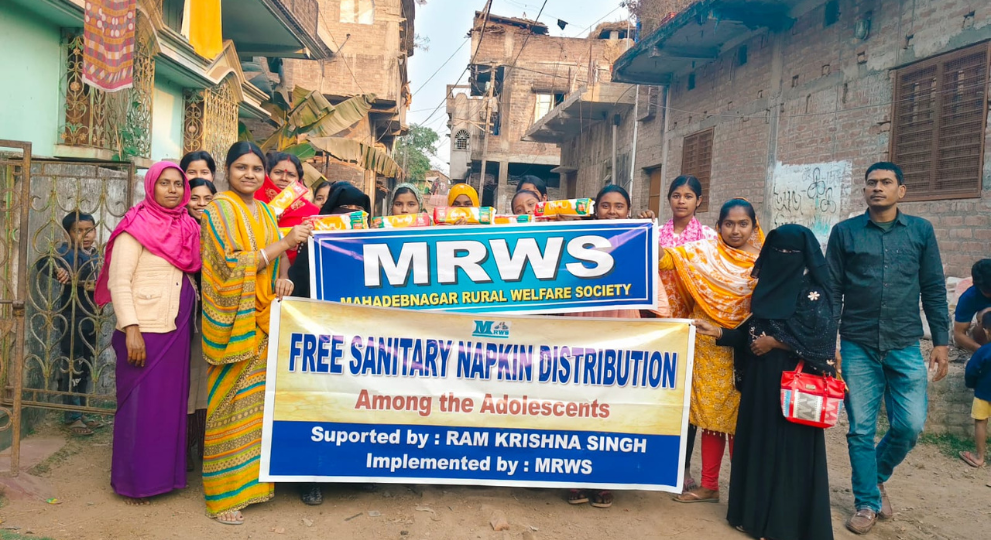
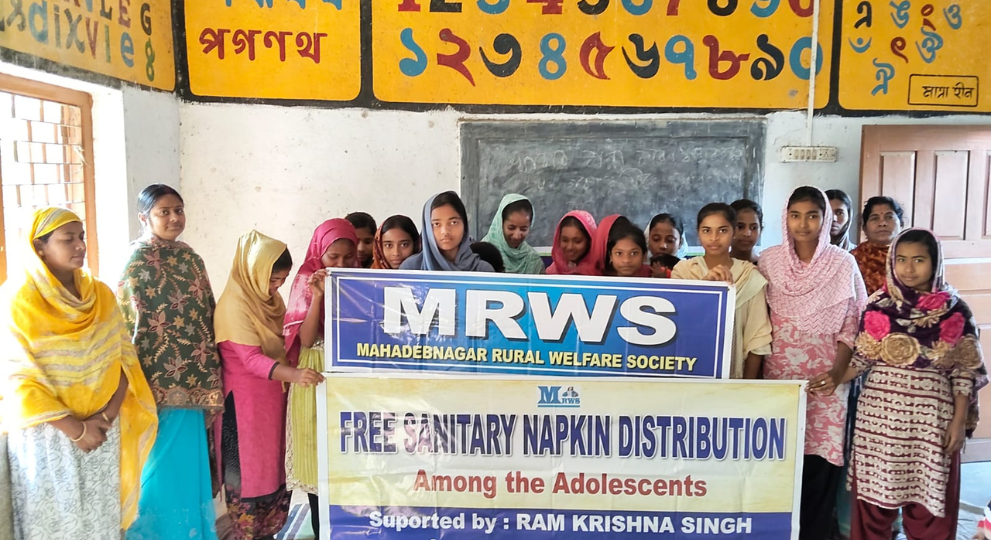
1. Free Sanitary Napkin Distribution, Free sanitary napkins were distributed to adolescent girls in all 25 villages. Special attention was given to girls who could not afford hygienic menstrual products. Volunteers demonstrated the correct method of using sanitary napkins.
2. Menstrual Hygiene Awareness MRWS volunteers organised interactive sessions covering: Importance of menstrual hygiene, Safe and hygienic practices during menstruation, Proper disposal of sanitary napkins, Breaking myths and taboos related to menstruation.
3. Home-Based Nutrition Education Sessions focused on: Importance of iron-rich foods, Affordable local nutrition options, Home-based nutrition for adolescent girls, Preventing anaemia through diet.
4. Guidance on Napkin Usage and Disposal, Demonstrations were provided on: Correct use of sanitary napkins, Changing frequency, Safe disposal methods, Environmental and health safety.
5. Child Marriage Prevention Awareness sessions highlighted: Legal age of marriage, Health and social risks of early marriage,
Importance of education and skill development, Reporting mechanisms and community support.
6. Education Promotion Volunteers motivated girls to: Continue their education, Avoid school dropout during menstruation cycle,
Maintain regular school attendance, Participate in adolescent group meetings.
Community Engagement
The programme also involved: Meetings with parents and guardians, Awareness among mothers on supporting adolescent girls, sensitisation of community leaders, Encouraging open discussions about menstrual health.
Outcomes and Impact
The project created a positive impact in the targeted villages: Increased awareness about menstrual hygiene and health. Reduction in myths and stigma related to menstruation. Improved use of sanitary napkins among adolescent girls. Enhanced knowledge of home-based nutrition. Increased confidence and self-care practices among adolescents. Better understanding of child marriage laws and risks. Increased support from parents and community members. Encouragement for girls to continue education.
Challenges Faced
Some challenges observed during the implementation included: Social taboos and hesitation in discussing menstruation. Limited awareness among parents. Irregular availability of sanitary products in remote villages. Financial constraints among families. Resistance from some conservative community groups.
Lessons Learned
Continuous awareness is essential for behavioural change. Community involvement improves acceptance. Peer education among adolescents is highly effective. Integrated approaches (health, nutrition, and education) produce better outcomes. Engagement of
mothers and community leaders increases programme sustainability.
Sustainability Plan
To ensure long-term impact, MRWS plans to: Continue adolescent group meetings. Promote low-cost sanitary napkin access. Strengthen linkages with health centres. Encourage local women’s groups to support menstrual hygiene. Expand awareness activities in additional villages.
Conclusion
The Free Sanitary Napkin Distribution Programme successfully improved menstrual hygiene awareness and practices among adolescent girls in Farakka Block. With the valuable support of Ram Krishna Singh, MRWS has taken an important step toward empowering marginalised adolescents, promoting health, preventing child marriage, and strengthening education. This initiative will continue to contribute to building a healthy, confident, and informed generation of girls in rural communities.