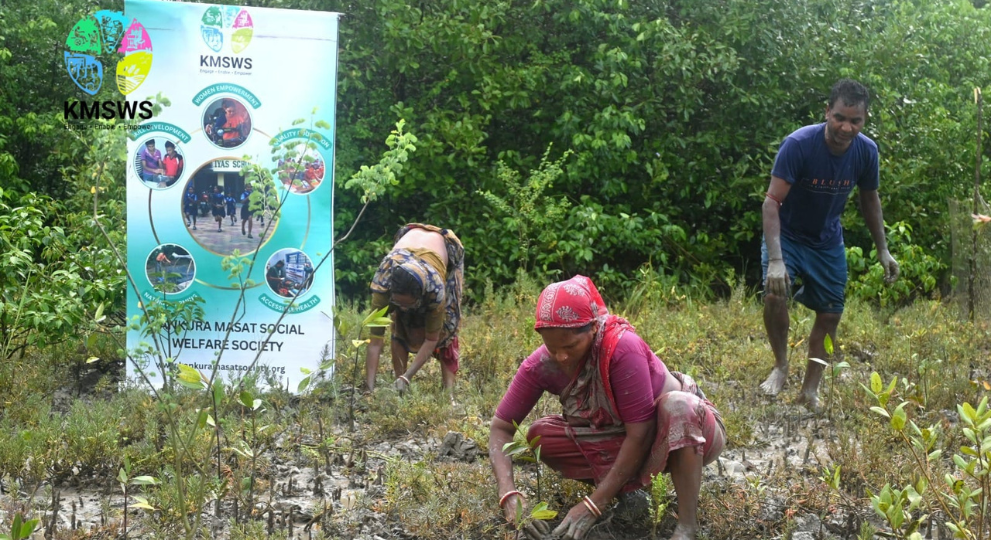
Real corporate social responsibility isn't measured in cheques signed — it's measured in children fed, mangroves rooted, and women earning their first independent wage.
In the fragile, tide-swept ecosystems of the Sundarbans and the rural hamlets of South 24 Parganas, thousands of children and families encounter daily hardships ranging from malnutrition and educational barriers to climate-induced environmental erosion. Yet, amid these formidable challenges, a story of sustained transformation has been unfolding for over two decades.
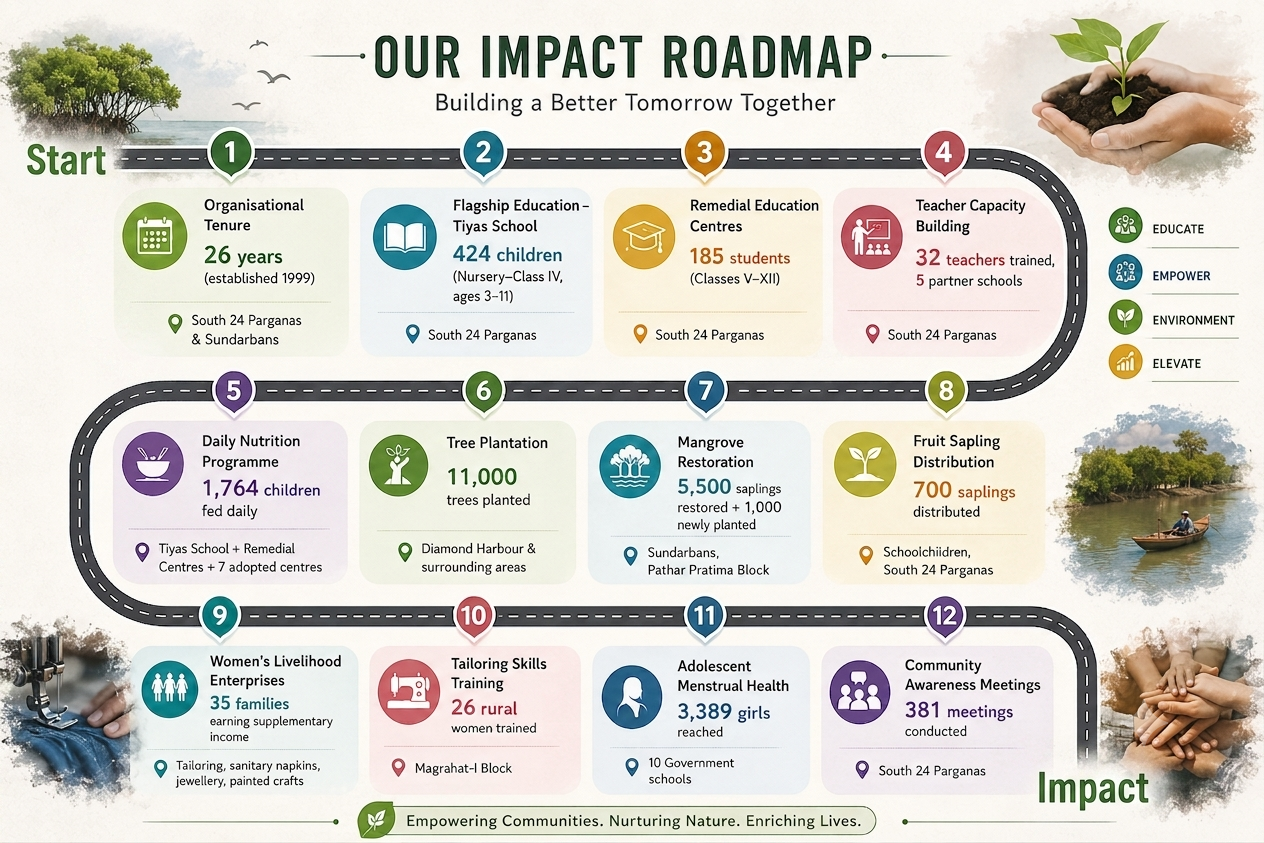
Established in 1999, the Kankura Masat Social Welfare Society (KMSWS) has dedicated 26 years to empowering rural communities through integrated initiatives in education, nutrition, health, women's self-reliance, and coastal conservation. To bridge corporate capital with grassroots execution, The Bengal Chamber Foundation (BCF)—the dedicated CSR wing of The Bengal Chamber of Commerce and Industry (BCC&I)—serves as a high-trust institutional channel. By connecting corporate CSR leaders with fully compliant, audited entities like KMSWS, BCF ensures that investments translate into measurable sustainable community development initiatives across West Bengal.
Learning and Nourishment as the First Line of Change
For the children of South 24 Parganas, opportunity often collides early with poverty, malnutrition and limited access to quality schooling. Kankura Masat Social Welfare Society (KMSWS) has built its response around a simple conviction: education and nutrition must move together, or neither truly works.
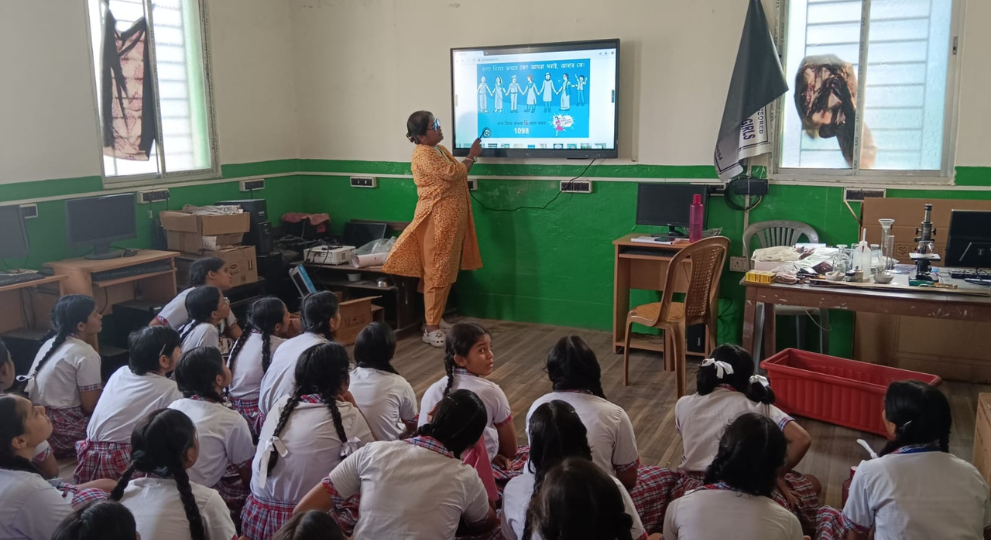
At the heart of this effort is Tiyas School, KMSWS's flagship institution, which currently educates 424 children between the ages of 3 and 11, from Nursery through to Class IV. The school blends activity-based learning, digital education, computer literacy and sport, aiming to nurture confident, capable learners rather than simply seat children through a syllabus. For adolescents who need continued support beyond primary years, KMSWS runs Remedial Education Centres, where 185 students from Classes V to XII receive academic assistance, mentoring and career guidance — support that matters enormously for first-generation learners trying to reduce dropout and reach higher education or stable employment.
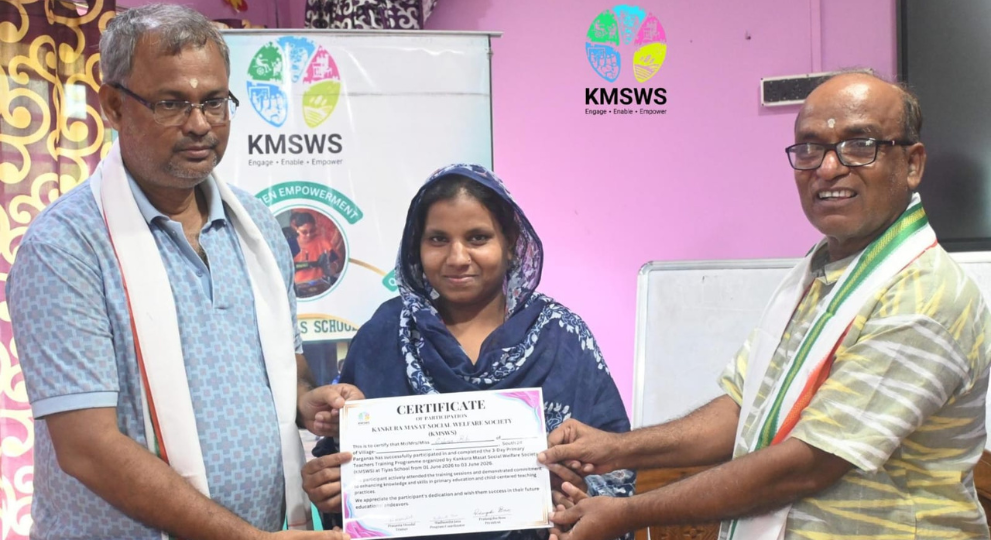
KMSWS's influence extends beyond its own classrooms. During the recent summer vacation, the organisation ran a Primary Teachers' Capacity Building Programme, bringing together 32 teachers from five underprivileged non-profit primary schools, including Tiyas School itself. The training focused on joyful learning, foundational literacy and numeracy, child-centred teaching methods and stronger classroom management — a multiplier effect that strengthens education quality well beyond KMSWS's own walls, and the kind of scalable csr activities that corporate partners increasingly look to support.
None of this holds without nutrition. KMSWS runs one of the region's largest community nutrition initiatives, providing freshly prepared meals every day to 1,764 children across Tiyas School, the Remedial Education Centres and seven adopted educational centres spread across different blocks of South 24 Parganas. The result is measurable: better attendance, stronger classroom participation and improved learning outcomes — proof that a full stomach is often the first requirement for a full education.
Restoring the Sundarbans and Building Women's Livelihoods
Few regions in India feel the impact of climate change as directly as the Sundarbans, where rising sea levels, recurring cyclones and environmental degradation threaten both livelihoods and biodiversity. KMSWS has made climate resilience a core pillar of its work rather than a peripheral concern.
To date, the organisation has planted 11,000 trees across Diamond Harbour and its surrounding areas, alongside the restoration of 5,500 mangrove saplings in the Sundarbans to reinforce natural coastal protection. This year, KMSWS extended the effort further by planting an additional 1,000 mangrove saplings in Pathar Pratima Block, backed by a dedicated one-year maintenance plan to give the young mangroves the best possible chance of survival. To bring the next generation into this stewardship, KMSWS also distributed 700 fruit saplings to schoolchildren — a small gesture with a long-term payoff for household nutrition and community greening alike.
Alongside environmental work, KMSWS has invested steadily in women's economic independence. The organisation recently established an Advanced Tailoring Training and Garment Production Unit, equipped with four new automatic sewing machines and two refurbished ones, enabling women to build advanced garment-manufacturing skills while earning through production. A parallel tailoring programme has just begun in Magrahat-I Block, where 26 rural women are receiving vocational training to improve their employability and support future entrepreneurship. Beyond tailoring, KMSWS backs livelihood work in cotton sanitary napkin production, handmade junk jewellery, hand-painted cotton bags and hand-painted sarees — enterprises through which 35 rural families now earn supplementary income.
KMSWS has also taken up adolescent health as an area too often left unspoken. Working extensively with Government schools, the organisation has reached 3,389 adolescent girls across 10 Government schools this year with menstrual health education and eco-friendly cotton sanitary napkins, while running 381 community awareness meetings with parents, teachers and community members to reduce stigma and improve school attendance among girls. These are the kinds of CSR initiatives that rarely make headlines, yet quietly reshape the confidence and health outcomes of an entire generation of young women.
Conclusion: Where Capital Meets Community
Twenty-six years of unglamorous, consistent groundwork have made KMSWS one of the more compelling case studies in effective corporate social responsibility in India — an organisation that has learned to move fluidly between classrooms, kitchens, mangrove nurseries and tailoring units without losing sight of the people at the centre of each programme. What KMSWS still needs, like most grassroots organisations, is the kind of sustained corporate partnership that turns pilot-scale success into district-wide reach. This is exactly where BCF steps in: verifying, structuring and channelling corporate CSR resources towards organisations that have already proven they can deliver.
As KMSWS looks ahead, its priorities remain consistent — expanding quality education, strengthening nutrition coverage, restoring fragile Sundarbans ecosystems, building sustainable livelihoods for women, and improving adolescent health outcomes across rural West Bengal. None of this happens in isolation. It happens through collaboration between grassroots delivery and corporate commitment — the essence of what corporate social responsibility should look like in practice.
If your organisation is ready to move beyond ad-hoc giving towards structured, measurable social impact, BCF can help you deploy CSR capital and organise employee volunteering directly with vetted, high-performing partners like KMSWS. Connect with The Bengal Chamber Foundation to explore partnership and volunteering opportunities aligned with your CSR strategy and the Sustainable Development Goals.
If your organisation is doing verifiable, on-ground work in education, health, livelihoods or environmental conservation and is seeking visibility with corporate CSR partners, BCF's directory offers a trusted platform to be discovered, audited and funded. Join the BCF network to connect your work with the corporate partners who are actively looking for organisations like yours.
Together, we can build healthier children, empowered women, greener communities and resilient futures — one verified, well-directed act of corporate social responsibility at a time.
Frequently Asked Questions
1. What areas does KMSWS focus on through its corporate social responsibility partnerships?
KMSWS works across five integrated areas — education, nutrition, health, women's empowerment and environmental conservation — reaching thousands of beneficiaries across South 24 Parganas and the Sundarbans. Its flagship initiatives include Tiyas School, Remedial Education Centres, a daily nutrition programme for 1,764 children, mangrove and tree plantation drives, and livelihood training for rural women.
2. How can corporates get involved with grassroot NGOs through BCF?
The Bengal Chamber Foundation (BCF) acts as the institutional bridge between corporates and verified grassroots organisations. Corporates can partner with BCF to deploy CSR capital, organise structured employee volunteering, and support specific programmes such as education, nutrition, climate restoration or women's livelihood initiatives.
BCF as the Institutional Bridge
Every meaningful act of corporate social responsibility begins with trust — trust that funds reach the right hands, that programmes are run by people who understand the ground realities, and that impact can be measured rather than merely promised. This is precisely the gap that The Bengal Chamber Foundation (BCF), the CSR wing of The Bengal Chamber of Commerce and Industry (BCC&I), was built to close. BCF acts as an institutional bridge, connecting corporates with audited, compliant, grassroots organisations that are already doing the difficult, patient work of community transformation.
One such organisation is Kankura Masat Social Welfare Society (KMSWS). Established in 1999, KMSWS has spent the past 26 years working alongside rural communities in South 24 Parganas, building integrated programmes across education, nutrition, health, women's empowerment and environmental conservation. It is a grassroots, community-based non-profit — the kind of partner that gives corporate social responsibility real, traceable meaning rather than a line item in an annual report. Today, KMSWS serves thousands of beneficiaries across the district, and through BCF, that work becomes visible and accessible to a wider circle of corporate partners looking to deploy their CSR resources with confidence.
Follow us on Facebook | Instagram | LinkedIn