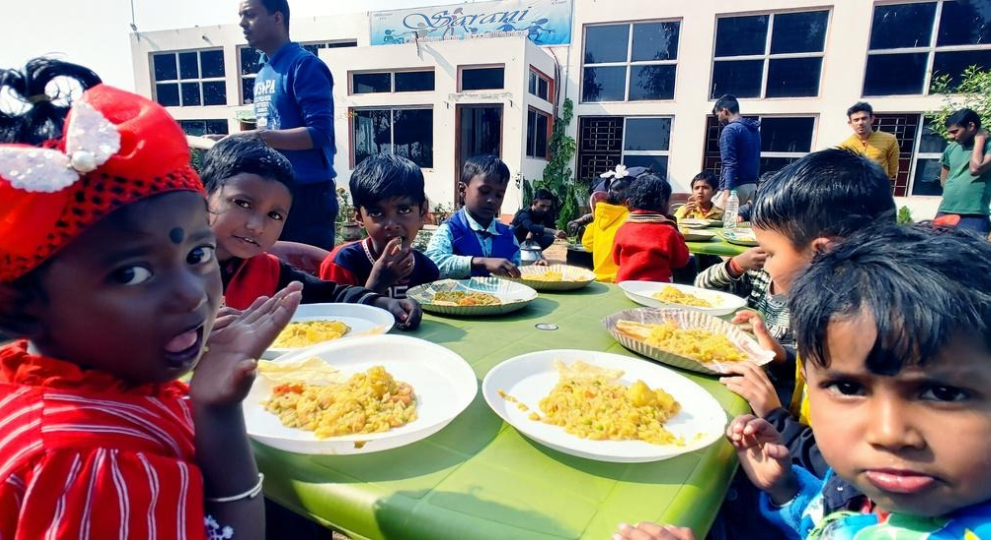
West Bengal's CSR ecosystem doesn't have an intent problem. Corporations set aside crores every year for grassroots development, yet a large share sits unspent or keeps flowing to the same handful of large, urban-facing NGOs. The real gap is verification. CSR heads need audit-ready documentation before they can release funds, and small, rural-facing organisations rarely have the bandwidth to produce it — even when their fieldwork is genuine and decades old.
The Bengal Chamber Foundation (BCF) was created with this objective in mind. It is not merely an NGO registry; it provides validation, enabling corporate social responsibility (CSR) heads to transition from initial interest to fund disbursal without months of external due diligence. Sarani (Sarani Center for Excellence) is perhaps the best illustration of this model.
The Bridge Between Capital and Impact
Sarani was founded in Kolkata in 1973, a volunteer-run initiative built on a simple premise: philanthropy scales when it's structured, not sporadic. For 50+ years, the organisation ran on a self-funded model — members pooling their own resources across healthcare, education, women's empowerment, de-addiction, and environmental work in and around the city.
Its most active field project today sits far from Kolkata, in Kumkuma Gram, Rajnagar Block, Siuri, Birbhum District — a shift from self-funded volunteer roots toward structured grassroots rural development in Birbhum. This is exactly where BCF's model earns its keep: connecting corporate CSR budgets to organisations that already have feet on the ground, long before an onboarding form gets filled out.
How BCF verifies a project: Every listed organisation is screened against registration status, compliance filings, and on-ground field checks before it's published. That screening layer is what turns a listing into one of the Verified CSR Projects in West Bengal on the BCF portal — donors get governance and impact they can independently confirm, not just a pitch deck.
On the Ground: Sarani's Three Pillars of Grassroots Transformation
Sarani's work in Birbhum runs across three connected pillars, each addressing a different layer of the same community — a child's early years, an adult's recovery, and the household's day-to-day survival.
Pillar 1 — Reimagining Rural Early Education
"Making a difference today for a better tomorrow." It's the line Sarani builds its rural early-education rollout around, and the on-ground numbers back it up.
The Sarani Pre-primary School, established by the organisation, shifts from rote learning to an inquiry-based and nature-orientated curriculum driven by curiosity rather than rote memorisation. The children are prompted to ask questions, observe and experiment — filling the gap left by regular education in rural belts.
The approach is carefully planned in a structured way rather than random. Sarani provides complimentary pick-up and drop-off transportation to 8 local villages, eliminating the obstacle preventing kids from attending school, combined with complimentary breakfast for each kid every day – a point which contributes to attendance as much as the curriculum itself. Smart TV learning kits, playschool kits, and picture books bring abstract notions to life for children who would have otherwise never seen them.
The outreach doesn't stop at the school gate, either. Door-to-door parental awareness workshops explain why early education matters, village by village, since enrolment in a rural belt depends as much on convincing a household as it does on building a classroom.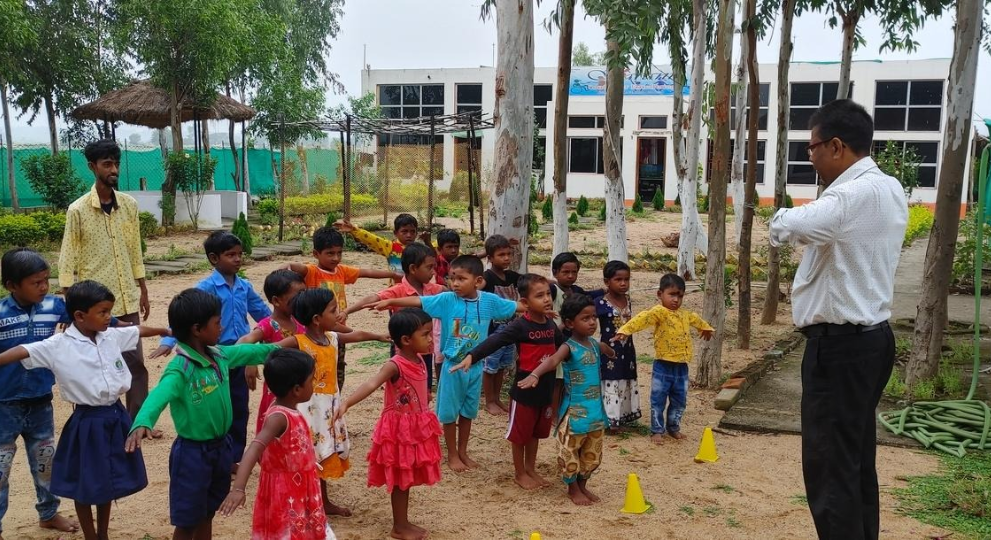
Pillar 2 — Holistic Recovery at the Rehabilitation & Wellness Center
"A healthy mind demands a conducive environment." Sarani's rehabilitation and wellness model is built around that principle, not around a prescription pad.
Sarani's Rehabilitation & Wellness Center takes on one of the least-funded categories in Indian CSR: addiction and mental health. The centre treats alcoholism, drug abuse, anxiety, stress, and depression through a lifestyle-driven recovery model rather than a purely clinical one.
The methodology is deliberately stigma-free — a peaceful environment, spiritual guidance, and structured, safe recovery programmes designed around the reality that addiction is a chronic, relapsing condition, not a moral failing.
"A spiritual problem doesn't have a chemical solution." That's the philosophy driving Sarani's lifestyle-first approach to de-addiction and mental wellness in Birbhum – treating the root cause, not just the symptom.
That framing matters as much as the treatment itself in a district where the social cost of seeking help often outweighs the disease.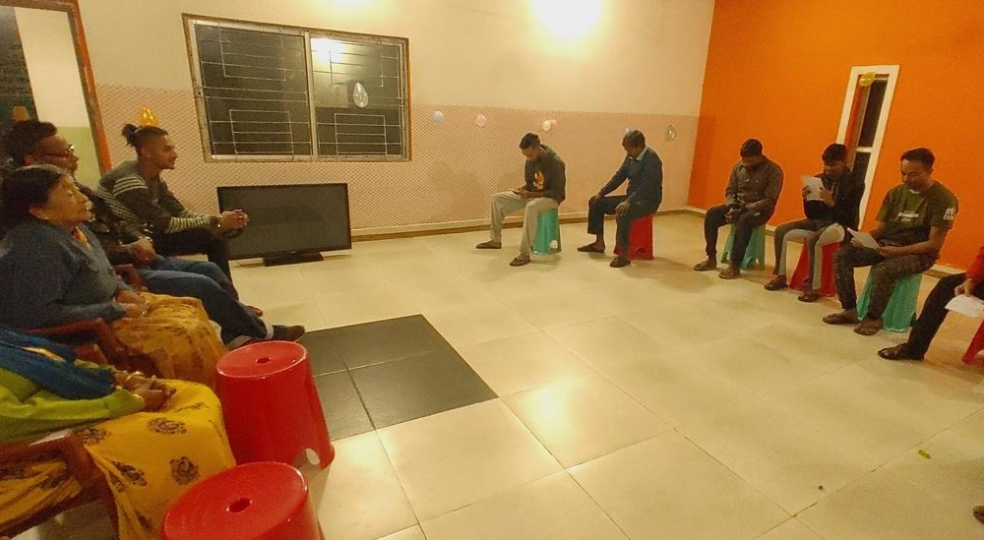
Pillar 3 — Social Safety Nets and Environmental Stewardship
Apart from schools and the centre, Sarani conducts a constant stream of community philanthropy on a grassroots level: free medical camps and health screenings in the local slums, direct grants to cancer patients and poor students, annual distributions of blankets, and its "Pledge for Green Earth" tree plantation program.
This is not an approach of one-time campaigns. Rather, it is the same volunteer-based approach that Sarani has been doing since 1973, now in the deprived parts of Birbhum.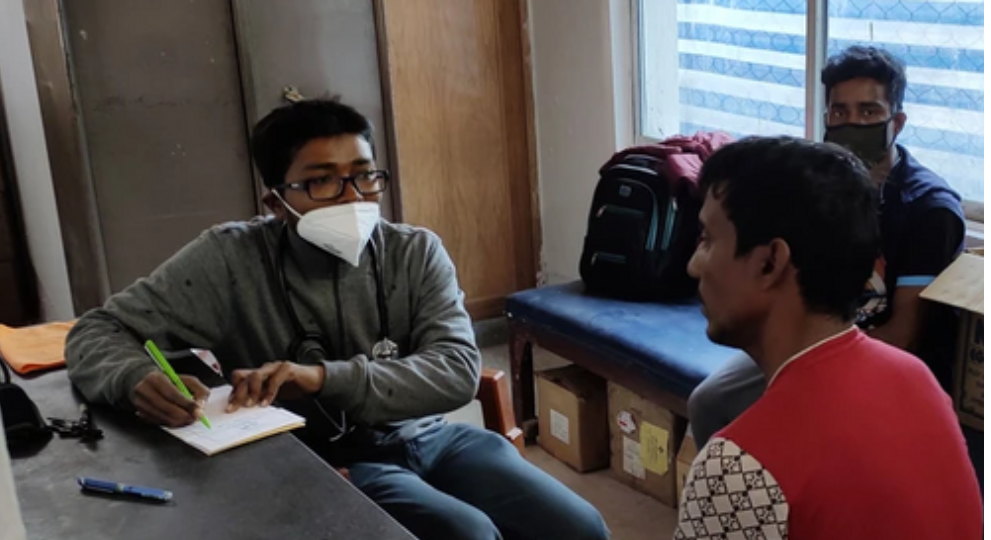
For an ESG officer, a good story isn't enough — it has to be backed by a registration trail. Sarani's documentation is exactly the kind of data layer that lets a corporate audit team sign off with confidence, and it's a core reason Sarani qualifies as a NITI Aayog-registered NGO West Bengal partners can fund without extended legal review.
Each of these maps to a specific compliance requirement — CSR-1 for CSR fund eligibility, Darpan ID for NITI Aayog traceability, and 10AC for tax-exemption status. For a corporate donor, that's the difference between a funding decision that takes weeks and one that takes months.
Frequently Asked Questions
How does BCF verify NGOs for CSR partnerships?
BCF cross-checks registration numbers, CSR-1 and 10AC filings, and NITI Aayog Darpan IDs against government records, then supplements that with direct field verification of the project site before an NGO is listed as partner-ready.What makes Sarani Center for Excellence eligible for corporate CSR funding in West Bengal?
Sarani combines 50+ years of operating history, complete CSR-1 and Darpan registration, and an active, verifiable field project in Birbhum — meeting the core criteria for verified CSR Projects in West Bengal that most compliance teams require.
Partner With Verified Impact
For CSR Heads and ESG Officers: Sarani's Birbhum project is one of several Corporate CSR partners Kolkata organisations can engage through BCF with registration and field data already verified. Explore the full listing on the BCF portal and start a partnership conversation directly.
For Grassroots NGOs: If your organisation has a documented track record and needs a credible pathway to corporate donors, BCF's verification process is built for exactly that. Apply for listing on the portal to get in front of CSR teams actively looking for partners like Sarani.
About BCF:
The BCF Portal (bengalchamberfoundation.org), developed by The Bengal Chamber of Commerce and Industry (BCC&I)—one of India's oldest chambers—serves as a trusted intermediary connecting verified West Bengal NGOs with corporate CSR mandates. The platform publishes NGO success stories because funding gaps are fundamentally information gaps, bridging corporate philanthropy and grassroots impact every day.