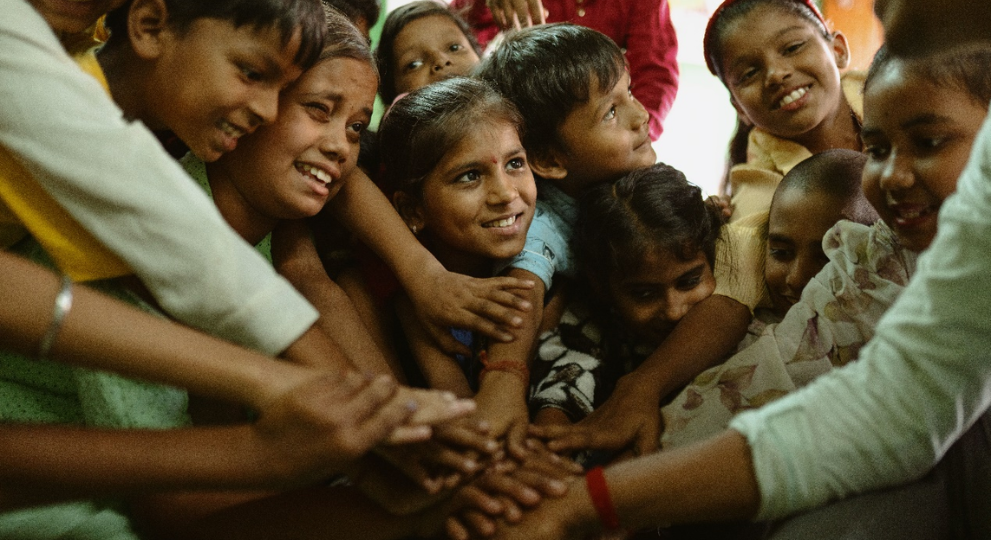
In the shadows of rapid urbanisation, thousands of children and families navigate a reality where daily survival overtakes ambition. For these vulnerable populations, systemic poverty is an invisible barrier that blocks access to education, health, and dignity. But what happens when corporate social responsibility (CSR) transcends mere compliance and becomes a catalyst for generational change?
At the Bengal Chamber Foundation (BCF), our mission has always transcended commerce—we believe in fostering responsible economic growth through robust corporate citizenship. Through our NGO Spotlight series, the Chamber proudly vets and highlights grassroots organisations delivering measurable, structural impact across Eastern India.
Today, we are profiling LittleBigHelp India Trust, a registered NGO that has been working on the ground in West Bengal since 2012.
The Origin and Vision of LittleBigHelp
The organisation was founded by Lisbeth Johansen from Denmark, who was deeply moved by the harsh conditions of children living on railway platforms and streets. This profound experience prompted a complete life transformation, inspiring her to dedicate her life to their welfare. Driven by the core vision, "We cannot help everybody, but we can help some. And we do it." The trust focuses on turning individual "little help" into a sustainable, collective "big help" for people in extreme need.
Since 2012, LittleBigHelp India Trust has been working tirelessly to change this narrative. What started as a single Day Protection Centre at Howrah Station, a slum-based school, and an open shelter has flourished into a powerhouse network of 25 projects. Today, backed by an operational team of 90 employees in India, the organisation directly supports over 3,000 vulnerable children and adults annually, creating a ripple effect that impacts 13,500 lives across the region.
Rooted deeply in empathy, LittleBigHelp doesn't just offer temporary charity; it creates sustainable, lasting change. By aligning its missions with nine UN Sustainable Development Goals (SDGs)—with a core focus on Goal 1: No Poverty—the trust empowers marginalised communities to break the cycle of dependency and build a self-reliant future.
Moving Beyond Charity: A Strategic Alignment with UN SDGs
Rather than cultivating a cycle of dependency, LittleBigHelp India Trust designs interventions that treat poverty not as a permanent state but as a systemic cycle that can be broken. Their 360-degree approach targets the root vulnerabilities through education, child protection, skill development, health and hygiene, and mental health interventions. The trust manages six core development pillars across Kolkata and Howrah.
Core Pillars of Intervention and Regional Impact
1. 24/7 Holistic Care: Girls’ & Boys’ Hostels (Thakurpukur Bazar)
- Location: Rajani Banerjee Road, Thakurpukur Bazar, LIC Colony
- Target Demographic: Highly vulnerable children aged 6 to 19 years
Established in 2014, these two dedicated hostels (formerly operated as Homes) provide long-term institutional support to 20 girls and 25 boys selected from the most vulnerable backgrounds. In India and West Bengal, children—especially girls—face severe, disproportionate protection risks, including child marriage, trafficking, exploitation, and abuse.
To counteract these threats, the hostels operate around the clock to create a space for the joy and freedom of childhood. Residents receive safe shelter, healthcare, balanced nutrition, mandatory formal school enrollment, targeted tutoring, and recreational activities like football and dance. Crucially, a specialised team of committed caregivers and skilled social workers deliver trauma-informed emotional support. This environment allows children to heal from early-life trauma while equipping them with the physical, mental, and social skills needed to navigate future adult challenges.
2. Early Intervention & Nutrition: Slum-Based Community Centres
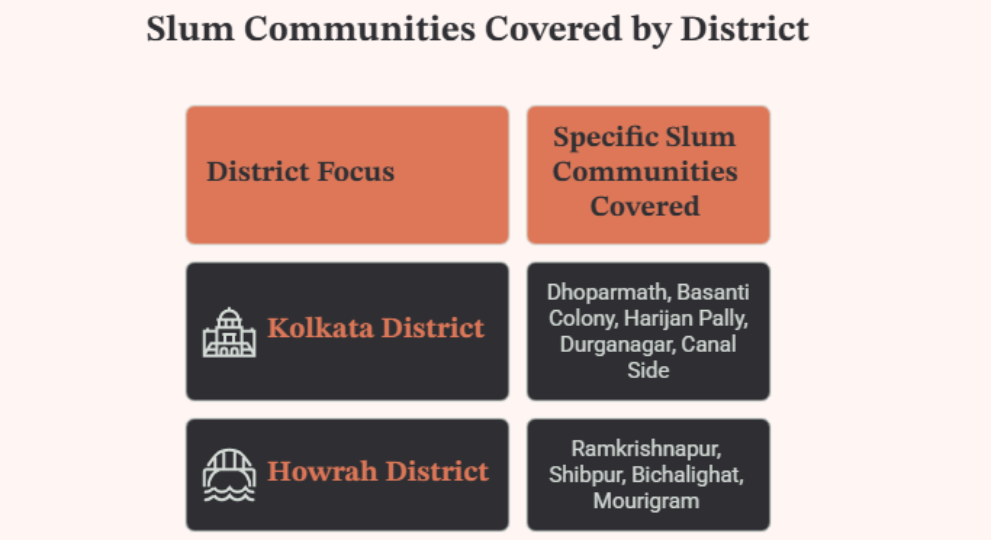
- Location: 9 Urban Slums across Kolkata and Howrah Districts
- Target Demographic: Children out of formal schooling and vulnerable families
In India, an alarming 45% of slum children drop out of school before the age of 13. While primary education is free, generational poverty acts as a systemic barrier. To capture dropouts and non-enrolled children early, the trust operates Community Centres inside dense slum pockets:
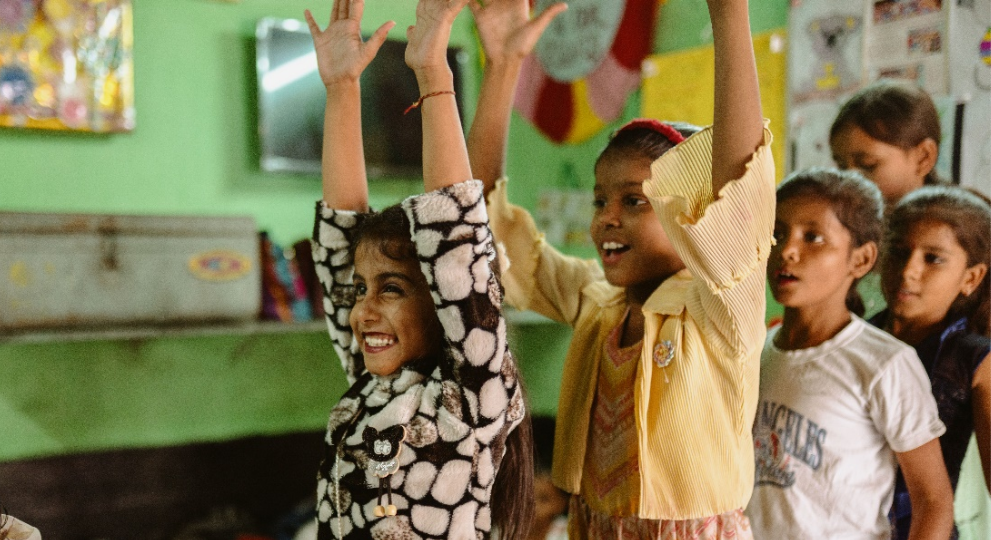
Children aged 6–14 years receive intensive, 12-month school-preparation courses using joyful learning methods before being transitioned and enrolled into formal primary schools. Once enrolled, they receive continued academic and social tutoring.
- Combatting Hidden Hunger: A cornerstone of this intervention is the introduction of a nutritious, one-time daily meal. This meal directly addresses hidden hunger among slum-dwelling youth, significantly boosting classroom concentration and supporting physical development.
- The "Change Agent" Model: Children within the programme are trained to become positive peer leaders, actively bringing healthy educational and hygiene practices back into their wider slum communities.
3. Adolescent Public Health & Gender-Focused WASH Initiatives
- Location: Embedded across all urban slum projects
- Target Demographic: Over 2,500 adolescent girls and young mothers (up to 25 years old)
In West Bengal, public health challenges run deep, with 42% of girls married before the age of 18 and diarrhoeal diseases remaining the third leading cause of under-5 mortality due to poor sanitation.
To restore health security and human dignity, LittleBigHelp runs targeted health and sex education workshops, teaching youth about their bodies, setting personal boundaries, and mutual respect. The trust has formally educated over 2,500 adolescent girls and young mothers on reproductive, sexual, and menstrual health. Physical interventions include organising specialised health camps with registered doctors, free medical screenings, distributing free sanitary napkins, and installing sanitary napkin vending machines alongside eco-friendly incinerator disposal units within the slums.
4. Economic Empowerment: Skill Development Training
- Location: 13 Urban Slums across Kolkata, Howrah, and rural extensions
- Target Demographic: Unemployed youth with an emphasis on marginalised men and women
To achieve true community self-reliance, LittleBigHelp runs market-aligned vocational training programmes that graduate job-ready individuals into the local economy:
- Service & Industry Roles: Phlebotomy, Pharmacy Assistant, Food & Beverage Associate, Driving, and Barbering.
- Creative Livelihoods: Tailoring Training, Beautician Courses, and Handmade Jewellery Design.
Trainees undergo rigorous soft-skills and financial literacy development, including maths tutoring for budgeting and assistance with opening personal bank accounts to securely accumulate savings. Upon completion, the trust facilitates formal certification, business start-up kits, and corporate job placement linkages.
- Measurable Financial Impact (Annual Outcomes): In a single financial year, over 500 marginalised men and women successfully completed their short-term skills training. Verified data shows that within just three months of graduation, female trainees experienced a staggering 496% increase in average monthly income and a 375% increase in their participation in family decision-making at home, driving real gender equity.
5. Digital Literacy & Workforce Capacity Building
- Location: Scaled across running projects
- Target Demographic: Vulnerable youth and students
To bridge the digital divide and build long-term workforce capability, the trust achieves the following targeted milestones annually:
- 150 Youth Beneficiaries: Receive intensive basic computer training, including Microsoft Office, typing, and internet navigation to prepare for entry-level administrative and office roles.
- 100 Government School Students: Students from Standard 8 and above receive professional Career Counselling to evaluate their inherent strengths, interests, and aptitudes, helping them make informed academic decisions like crucial stream selections.
- 315 Vulnerable Adolescents: Receive dedicated academic tutoring to support their ongoing education, overcoming the complete lack of educational support in their home environments.
6. Mental Health Integration
- Location: Embedded universally across all 25 projects
- Target Demographic: Total beneficiary footprint
Recognising that psychological resilience is essential for socioeconomic upward mobility, LittleBigHelp embeds professional mental health counselling, emotional well-being workshops, and structured mentorship into every project layer. This universal support helps youth and children cope with chronic, poverty-induced stress, build self-confidence, and map out positive life goals.
7. The Family Strengthening Project
- Location: Santragachi, Dhoparmath, and Shree Krishna Colony slums
- Target Demographic: 20 economically fragile families (Last FY baseline)
Many low-income urban families face severe challenges that limit their stability. Adults frequently rely on volatile, informal day labour, leaving households vulnerable to chronic financial insecurity, domestic friction, intergenerational trauma, and substance abuse. This project stabilises and empowers househ olds to live with dignity. It pairs direct food support, education, and health/hygiene aid with structural linkages to government welfare schemes and adult skill development programmes.
Download the LittleBigHelp India Trust Activity Report (PDF) for an in-depth look at project timelines, field audits, and verified community impact metrics.
Partner with BCF and LittleBigHelp India Trust
Grassroots transformation does not happen by chance; it happens by design, and the exemplary work of LittleBigHelp India Trust is a testament to this truth. In a country where 46.5% of the population lives on less than Rs. 200 per day, this NGO moves beyond managing symptoms. They systematically dismantle the core drivers of generational poverty by providing vulnerable children with 24/7 trauma-informed care, rescuing dropouts through joyful schooling, and equipping marginalised adults with high-demand vocational skills. However, even the most impactful grassroots models require structural fuel to sustain and scale.
As a trusted institutional pillar, the Bengal Chamber Foundation (BCF) acts as the vital strategic bridge connecting high-performing, heavily vetted NGOs with the corporate ecosystem. Through a strategic alignment with the Bengal Chamber Foundation, forward-thinking businesses can channel their corporate social responsibility funds into verified NGO projects to foster sustainable livelihoods and child protection across West Bengal. BCF eliminates visibility gaps and compliance risks, ensuring that philanthropic capital yields a profound, auditable social return on investment.
To ensure that these life-changing projects continue to shield thousands from the vulnerabilities of street and slum life across Kolkata and Howrah, this NGO needs your immediate financial partnership to anchor their upcoming community fundraising initiatives. Every rupee deployed to this NGO acts as a direct investment in the human capital of West Bengal, keeping safe havens open around the clock and funding critical midday meals that combat hidden hunger.
We invite our member companies, corporate visionaries, and individual philanthropists to step forward to this cause; your contributions can underwrite technical vocational labs and open vital hiring pipelines for certified graduates.
To know more about LittleBigHelp NGO – its operational footprints and individual project details – you can explore the dedicated LittleBigHelp India Trust NGO Page directly on the Bengal Chamber Foundation portal.
Frequently Asked Questions
1. How does partnering through the Bengal Chamber Foundation guarantee compliance with my company's corporate social responsibility (CSR) mandates?
The Bengal Chamber Foundation acts as a rigorous compliance gatekeeper by thoroughly vetting grassroots organisations before profiling them on our portal. LittleBigHelp India Trust holds all necessary legal benchmarks required for secure corporate social responsibility deployment, including an active Trust Deed, FCRA certification for international compliance, 80G tax-exempt status, and valid CSR Form 1 and NITI Aayog Darpan registrations, ensuring your capital is backed by absolute transparency and auditability.
2. What core social causes does the NGO work on, and how can corporate entities get involved? LittleBigHelp India Trust operates at the intersection of child protection, holistic education, public health, and sustainable livelihood creation across West Bengal’s most vulnerable urban slums. By aligning its operations with nine UN Sustainable Development Goals (SDGs), the organisation runs 24/7 hostels for at-risk youth, operates early-intervention community centres that combat hidden hunger, delivers critical adolescent healthcare, and deploys market-aligned vocational training centres to break the cycle of poverty. Corporate entities can seamlessly get involved by deploying compliance-ready CSR capital to underwrite specific projects, sponsoring upcoming community fundraising events, or opening corporate hiring pipelines within their operations to absorb the NGO’s job-ready vocational graduates.